


Introduction
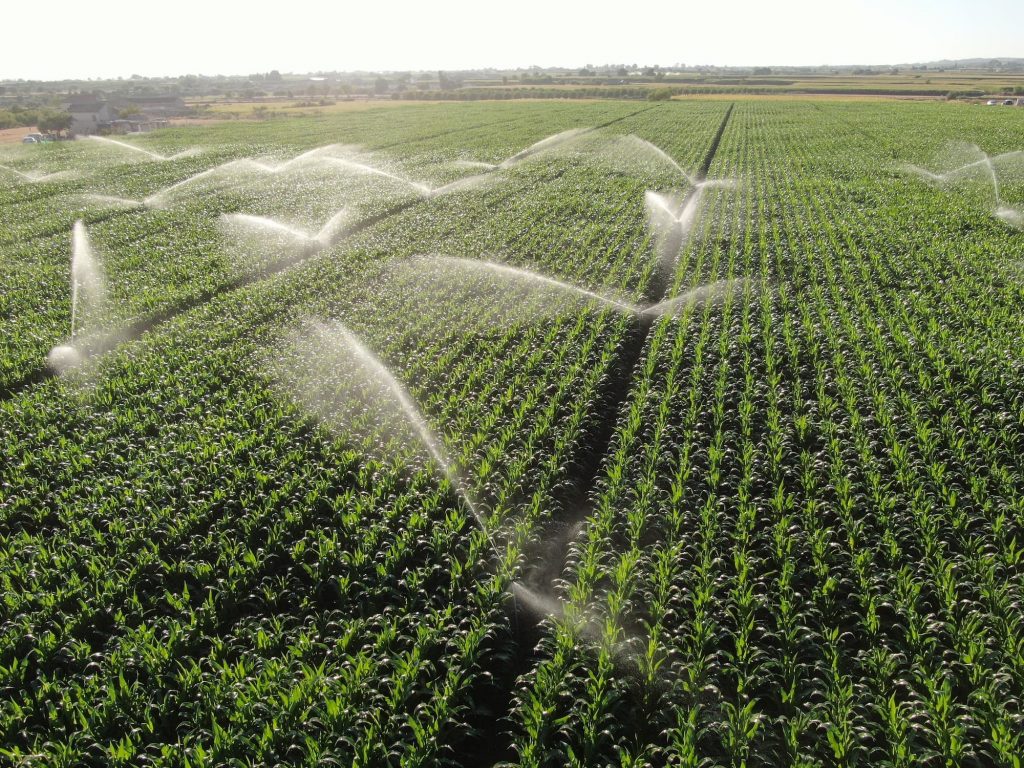
Within the framework of the Recovery, Transformation and Resilience Plan adopted by the Council of Ministers on April 27, 2021, and approved by the EU Council on July 13 of the same year, Component 3, “Environmental and Digital Transformation of the Agri-food and Fisheries System,” is included. Within this component, Investment C3.I1, “Plan for Improving Efficiency and Sustainability in Irrigation,” provides for investments in the modernization of sustainable irrigation systems in each of the selected projects, with the aim of promoting water conservation and energy efficiency in Spanish irrigation.
Agreements
In accordance with this measure, on June 25, 2021, an agreement was signed between the Ministry of Agriculture, Fisheries and Food and the State-owned Agricultural Infrastructure Company, SEIASA, regarding the Phase I irrigation modernization works, defining the selected works and the environmental improvements (Annex III of the agreement) included in the actions. On July 21, 2022, an identical agreement was signed between MAPA and SEIASA for Phase II of the plan, including new works for its implementation.
DNSH
All measures and actions included must respect the principle of “not causing significant harm to the environment” (Do not significant harm – DNSH principle) and its implementing regulations, Regulation (EU) 2021/41 of the European Parliament and of the Council of 12 February 2021 establishing the Recovery and Resilience Facility and Regulation (EU) 2020/852 on the establishment of a framework to facilitate sustainable investment (Taxonomy Regulation).
Guidelines
To guarantee and facilitate the correct implementation at the project level of this “DNSH principle” and the contribution of environmental improvements to its achievement, the MAPA commissioned the Higher Council for Scientific Research (CSIC) to develop five scientific-technical guidelines for their application in all actions to be carried out whose components include any of the aspects defined by them.
- Guideline 1: Development of scientific and technical guidelines for the establishment of sensor-based monitoring systems for soil moisture content, by measuring the volumetric content and/or matric potential of water in the soil (sensors and remote control unit).
- Guideline 2: Development of scientific and technical guidelines for the establishment of collective automatic monitoring systems for the control and monitoring of irrigation water quality (nutrient content, electrical conductivity, and other ions), of particular relevance to non-conventional water resources. This also includes guidelines for the installation of control sections and sensors that monitor the quantity and quality of irrigation return flows to control the pollution of the receiving water bodies in each case.
- Guidelines 3 and 4: Development of scientific and technical guidelines for the design, management, and maintenance of measures to mitigate harm to wildlife in irrigation ponds and associated infrastructure: measures to prevent entry, measures to facilitate exit, and construction of drinking troughs for wildlife. These guidelines will include related content to be integrated into the training program on good agricultural practices for project beneficiaries.
Development of scientific and technical guidelines for the implementation and maintenance of conservation vegetation structures designed for water retention and regulation, runoff control, nutrient absorption, and protection against soil erosion, and/or other nutrient retention surfaces to reduce diffuse pollution. These measures will also aim to improve the landscape and biodiversity. They will include content related to integration into the training program on good agricultural practices for project beneficiaries.
- Guideline 5: Development of a dissemination and training program on good agricultural practices aimed at the beneficiary Irrigation Communities: recipients, theoretical and practical content (on the subjects referred to in the previous sections and on soil conservation practices, fertigation, efficiency in the use of water and energy, mitigation and adaptation to climate change), timetable, profile of trainers and estimated budget.
To ensure the correct implementation at the project level of the “DNSH principle” and its implementing regulations, Regulation (EU) 2021/41 of the European Parliament and of the Council of 12 February 2021 establishing the Recovery and Resilience Facility and Regulation (EU) 2020/852 establishing a framework to facilitate sustainable investment (Taxonomy Regulation), and the contribution of environmental improvements to achieving it, Annex III of the MAPA-SEIASA agreements relating to the irrigation modernization works of the Plan for the Improvement of Efficiency and Sustainability in Irrigation will incorporate specific dissemination and training actions on good agricultural practices aimed at the members of the water user communities benefiting from each project. These dissemination and training actions on good agricultural practices must take into account the provisions of the corresponding scientific and technical guideline of the Spanish National Research Council (CSIC). Prepared at the request of the Ministry of Agriculture, Fisheries and Food to comply with the DNSH principle within the framework of the Recovery, Transformation and Resilience Plan. For the proper implementation of this environmental improvement, the training staff must successfully complete the courses of the Training of Trainers Program in Good Agricultural Practices in Irrigated Agriculture, organized by the Ministry of Agriculture, Fisheries and Food, within the framework of the PRTR, prior to delivering the training to the irrigation communities participating in each of the projects. This training for the irrigation communities will be carried out before the completion of each of the works.
Additional information on the Recovery, Transformation and Resilience Plan can be found through the following link from the Ministry of Agriculture, Fisheries and Food:
lorem ipsum
Lorem ipsum dolor sit amet consectetur adipiscing elit montes est, urna lobortis inceptos enim ornare parturient pulvinar. Scelerisque ante pulvinar cursus at potenti eleifend pellentesque, massa inhabitant neque bibendum aliquet turpis, rhoncus nisi libero praesent ad imperdiet. Hac faucibus porta mi natoque luctus nisl, quam ridiculus primis vehicula ultricies diam, arcu in consequat ultrices augue.
Vitae lacus ante fringilla condimentum turpis erat ultrices aliquam consequat non convallis inceptos parturient, aenean ad dictum accumsan tellus morbi orci laoreet etiam quis libero senectus. Arcu lectus montes vel conubia nullam cum pharetra mi, tempor nulla vitae parturient inhabitant dapibus felis, rutrum congue vivamus curabitur sollicitudin tincidunt nisl. Facilisis laoreet lacus pellentesque mattis purus, leo penatibus ac eget malesuada, et ultrices fusce porttitor.
Lorem ipsum dolor sit amet consectetur adipiscing elit montes est, urna lobortis inceptos enim ornare parturient pulvinar. Scelerisque ante pulvinar cursus at potenti eleifend pellentesque.
lorem ipsum
Lorem ipsum dolor sit amet consectetur adipiscing elit montes est, urna lobortis inceptos enim ornare parturient pulvinar. Scelerisque ante pulvinar cursus at potenti eleifend pellentesque, massa inhabitant neque bibendum aliquet turpis, rhoncus nisi libero praesent ad imperdiet. Hac faucibus porta mi natoque luctus nisl, quam ridiculus primis vehicula ultricies diam, arcu in consequat ultrices augue.
Vitae lacus ante fringilla condimentum turpis erat ultrices aliquam consequat non convallis inceptos parturient, aenean ad dictum accumsan tellus morbi orci laoreet etiam quis libero senectus. Arcu lectus montes vel conubia nullam cum pharetra mi, tempor nulla vitae parturient inhabitant dapibus felis, rutrum congue vivamus curabitur sollicitudin tincidunt nisl. Facilisis laoreet lacus pellentesque mattis purus, leo penatibus ac eget malesuada, et ultrices fusce porttitor.
 English (UK)
 Español
 Français
 Català
 Galego
 Euskara